




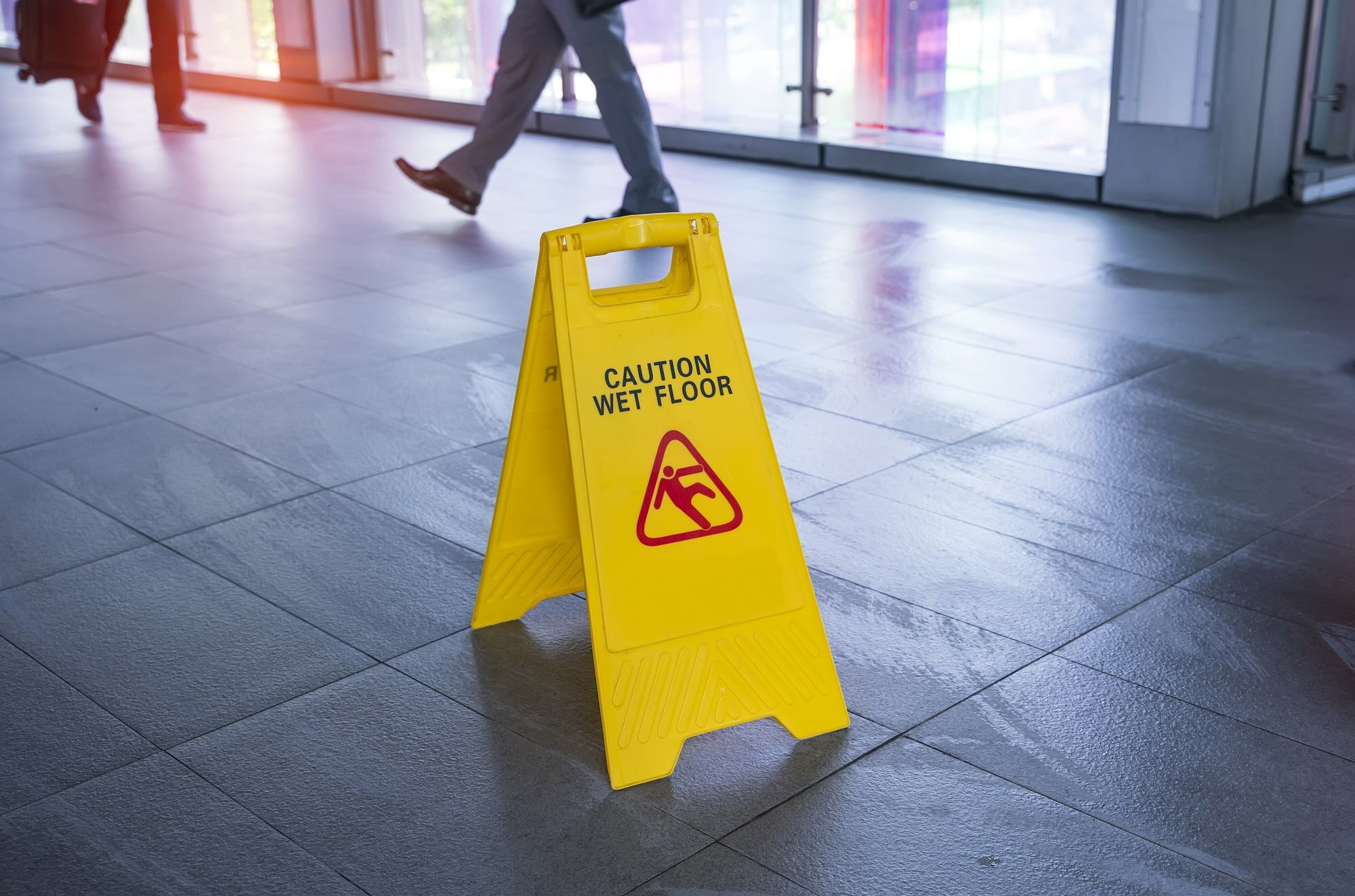
Do Wet Floor Signs Actually Protect Businesses From Liability?
If you slipped and fell at a store and there was a yellow cone nearby, you may have been told you have no case. That is not always true. A wet floor sign is not a legal shield. It is one factor among many, and whether it actually protects a business from liability depends on the full circumstances of what happened.
Understanding how Oklahoma law treats these warnings can make a significant difference in whether you pursue a claim and what that claim is worth.
What a Wet Floor Sign Is Actually Supposed to Do
Under Oklahoma premises liability law, property owners and businesses have a duty to keep their premises reasonably safe for customers and guests. When a hazard exists, they are required to either fix it within a reasonable time or provide adequate warning.
A wet floor sign is a warning. That’s it. It signals that someone identified a hazard and chose to flag it rather than address it immediately. Whether that warning was adequate depends on several things:
- Was the sign visible and properly placed near the actual hazard?
- Was the sign large and clear enough to be noticed by someone walking normally?
- Was the spill or wet area recent, or had it been there long enough that it should have been cleaned up?
- Did the sign actually communicate the specific danger?
A sign placed around a corner, behind a display, or flat on the ground after being knocked over does not constitute adequate warning. Placement matters, and courts look at it carefully.
When a Sign Is Not Enough
There are situations where a wet floor sign simply does not get a business off the hook.
If the hazardous condition had existed for an extended period, the business may have been expected to clean it up rather than just cone it off. A puddle that sat unattended for two hours is a different situation than one that formed five minutes before you walked through.
Similarly, if the warning was placed in a way that any reasonable person could have missed it, the business cannot hide behind its existence. The standard is not whether a sign was present. It is whether the warning was reasonable under the circumstances.
Oklahoma follows a modified comparative negligence rule, which means that even if you are found partially responsible for the fall, you can still recover damages as long as your fault does not exceed 50 percent. A business may argue you should have seen the sign. Your attorney will examine whether the sign was adequate in the first place.
What This Means for Your Claim
If you were injured in a slip and fall and there was a wet floor sign present, do not assume your claim is over. The presence of a sign opens a conversation, not a closed door.
Key questions in these cases include:
- Was the hazard created by the business’s own actions?
- Did employees know about the condition long before the accident?
- Was the warning placed in a way a reasonable person would have seen it?
- Was the underlying problem something that should have been corrected, not just flagged?
Evidence like surveillance footage, incident reports, and witness statements can all shed light on what the business knew and when.
Talk to a Midwest City Slip and Fall Lawyer
A Midwest City slip and fall lawyer can review the details of your accident and help you understand whether the warning provided was legally sufficient. These cases turn on specific facts, and having someone who knows Oklahoma premises liability law in your corner matters.
Polchinski & Smith Personal Injury Lawyers represent injured Oklahomans who deserve honest answers about their rights. If you were hurt on someone else’s property, reaching out to discuss what happened is a reasonable first step.


